Source Denture Silicone Impression Material for Die Making, Model Making, and Denture Processing
Explore 30 listings of denture silicone impression material suitable for die making, model making, and denture processing. Buyers can compare specifications, packaging, and pricing from verified suppliers offering customized options.
Key considerations
Products List


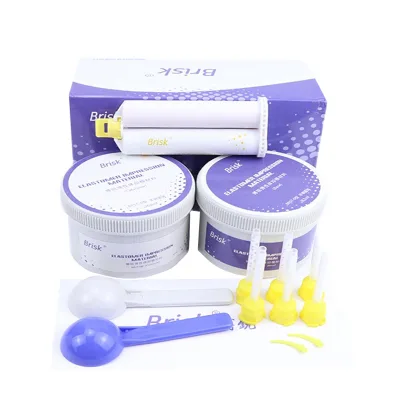


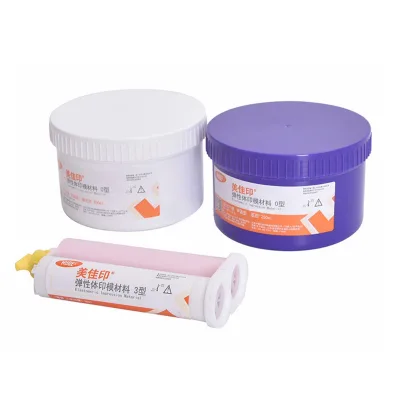
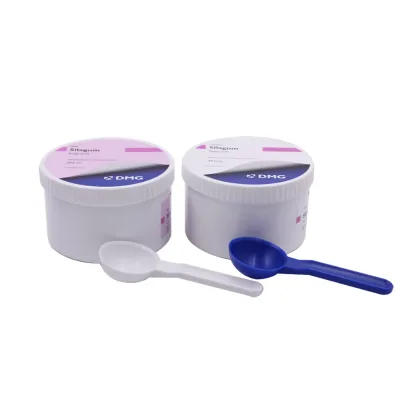

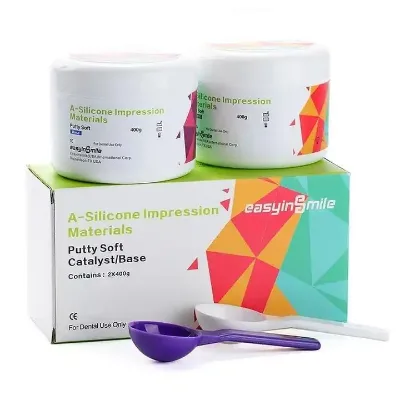
Comprehensive Sourcing Guide
Strategic Sourcing Guide for Denture Silicone Impression Materials
The global demand for high-precision dental materials continues to expand, driven by the increasing need for accurate prosthetic solutions and orthodontic treatments. For procurement professionals specializing in dental supplies, the category of denture silicone impression material represents a critical segment where technical precision directly correlates with clinical outcomes. Sourcing this specific equipment requires a disciplined approach that balances technical specifications, regulatory compliance, and supply chain reliability. This guide outlines the essential factors buyers must evaluate when procuring silicone impression materials, ensuring that the selected products meet the rigorous standards required for dental departments and oral health facilities.
Technical Specifications and Material Composition
When evaluating denture silicone impression materials, the primary focus must be on the physical and chemical properties that define the material's performance. The supplied product data indicates that these materials often fall under the classification of "Specialized Instrument Equipment" with specific attributes such as "Light Body" viscosity. This distinction is vital because the viscosity determines the material's ability to capture fine details of the oral cavity. Buyers should verify that the product model explicitly states the intended use, such as "Die Making," "Model Making," or "Denture Processing," as these applications demand different rheological properties.
The composition of the material is another critical technical parameter. Many products in this category are described as "Silicone Elastomer Impression Material," which typically involves a two-part system consisting of a base and a catalyst. The standard configuration observed in the market often includes specific ratios, such as "1 Base + 1 Catalyst," sometimes accompanied by auxiliary tools like mixing tips or spoons. The "Mixing Time" is a crucial specification; data suggests a range of approximately 1.5 minutes to mix putty and catalyst, followed by a setting time of roughly 3 minutes under ideal operating temperatures of 23°C. Buyers must confirm that the supplier provides clear instructions on these timing parameters, as deviations can lead to inaccurate impressions.
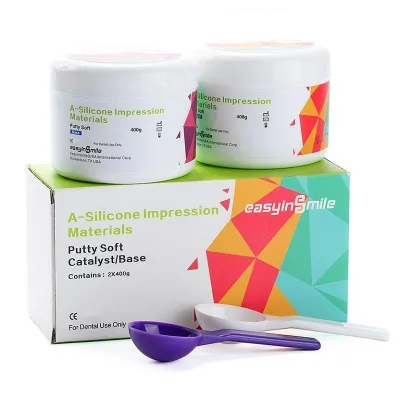
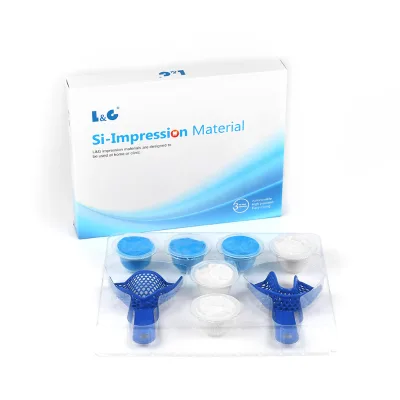
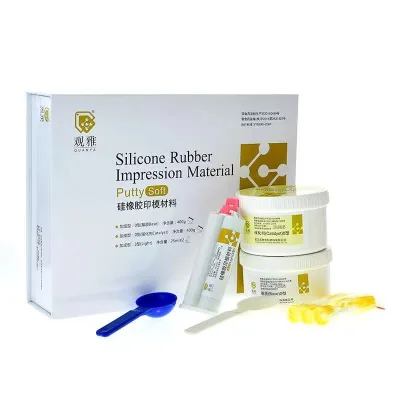
Furthermore, the physical form of the material varies. Some products are packaged as "Putty Base" and "Putty Catalyst" in specific weights, such as 250g each, while others may be presented as "Light Body" variants. The packaging standard often dictates the usability of the product in a clinical setting. For instance, a standard pack might include "6pcs yellow mixing tips & 2 pcs yellow tip" or a set configuration of "12boxes/CTN." Understanding these specifications ensures that the procurement team orders the correct configuration for their specific workflow, whether it involves manual mixing or automated dispensing systems.
Compliance, Certification, and Regulatory Standards
Regulatory compliance is non-negotiable in the medical device sector. For dental impression materials, the "Instrument Classification" is a primary indicator of regulatory status. The available data points to products classified as "Class I," which generally implies a lower risk category but still requires strict adherence to safety standards. Buyers must verify that the product carries the "CE" certification, a mandatory requirement for medical devices entering the European market and often recognized as a baseline for quality in other regions.
The "Standard" of the product is another area requiring rigorous verification. While specific numerical standards may vary by region, the product data highlights standards related to the physical composition, such as "250g1 Putty Base + 250g1 Putty Catalyst + 2 Meas." This indicates that the material must meet specific weight and component consistency requirements. Additionally, the "Storage" conditions are a regulatory proxy for product stability; materials must be stored in "Sealed Storage, Keep in Dry, Avoid Light" environments to maintain their chemical integrity.
Buyers should also check for "OEM" capabilities, which include "Logo Printing, Private Label & Custom Box Outside." This feature is often relevant for distributors who need to brand the product for their specific market. However, the presence of private labeling does not exempt the product from its core regulatory requirements. The "Shelf Life" is another critical compliance metric, with observed data indicating a "3 Years" duration. Ensuring that the supplier guarantees this shelf life under proper storage conditions is essential for inventory management and waste reduction.
Cost Drivers and Pricing Dynamics
The pricing of denture silicone impression materials is influenced by several factors, including material composition, packaging complexity, and order volume. The observed price range in the market spans from 1.39 to 50 USD, a wide variance that reflects differences in product type, brand, and quantity. Lower prices often correspond to bulk orders or basic configurations, while higher prices may reflect specialized formulations, such as "Fast Set" variants or premium brands like "Umg" or "Eluck."
The "MOQ" (Minimum Order Quantity) is a significant driver of the unit cost. The data shows a broad MOQ range from 1 box to 1080 bags. For smaller clinics or testing phases, a low MOQ of 1 box is advantageous, allowing for flexibility without significant capital commitment. Conversely, large-scale distributors or hospital networks may benefit from high-volume orders, such as 1080 bags, which typically result in a lower cost per unit. The packaging configuration also impacts cost; for example, a "Carton" containing "45sets/CTN" offers a different economic structure compared to individual "Paper Box" units.
Buyers must also consider the "Product Specification" and "Single package size" when calculating logistics costs. Larger packages, such as those with dimensions listed as "XX cm," may incur higher shipping fees but reduce the frequency of reordering. The "Brand" name can also influence pricing, with established brands potentially commanding a premium due to perceived reliability and consistent quality. However, buyers should not assume that a higher price guarantees superior performance; instead, they should correlate price with the specific technical features and certifications required for their application.
Typical Applications and Departmental Fit
The versatility of denture silicone impression materials makes them suitable for a wide range of dental applications. The "Applicable Departments" listed in the product data include the "Dental Department" and the "Oral Health Department," indicating their broad utility in general dentistry and specialized oral care. The specific "Usage" cases are diverse, ranging from "Die Making" and "Model Making" to "Denture Processing" and "Orthodontic Material" preparation.
For "Denture Processing," the material must offer high stability and accuracy to ensure the final prosthetic fits correctly. The "Features" of the material, such as being "Stable," are crucial for this application. Similarly, in "Orthodontic Material" contexts, the ability to capture precise tooth positions is paramount. The "Power Source" for these materials is typically "Manual," meaning the mixing and application rely on the clinician's skill rather than automated machinery. This manual aspect requires training and consistency in the mixing process to achieve the desired results.
The "Keyword" associated with these products, such as "Dentures Silicone Impression," highlights their primary function. However, buyers should also consider secondary applications like "Maxillofacial Prosthesis Materials." This broader applicability suggests that a single product line might serve multiple needs within a dental practice, potentially simplifying inventory management. The "Nature" of the product as "Specialized Instrument Equipment" underscores its role as a critical tool rather than a consumable, although some products are marked as "Disposable" while others are "Non-Disposable," depending on the specific design and intended use.
Supplier Evaluation and Sourcing Strategy
Selecting the right supplier is as important as selecting the right product. The "Brand" names observed, such as "Umg" and "Eluck," provide a starting point for identifying reputable manufacturers. However, buyers should not rely solely on brand recognition. Instead, they must evaluate the supplier's ability to meet specific requirements regarding "Customization" and "OEM" services. The availability of "Private Label & Custom Box Outside" options indicates a supplier's flexibility in adapting to the buyer's branding needs.
The "Location" of the supplier is another critical factor. The data indicates origins in "Hebei, China (Mainland)," "Shaanxi," and "Guangdong, China." These regions are known for their manufacturing capabilities, but buyers should verify the specific production facilities to ensure quality control. The "Place of Origin" can also influence lead times and shipping costs. For instance, a supplier in Guangdong might offer faster logistics to coastal ports compared to one in Shaanxi.
Buyers should also assess the supplier's capacity to handle different "MOQ" levels. A supplier offering a low MOQ of 1 box may be more suitable for initial trials, while one capable of fulfilling orders of 1080 bags is better for long-term supply contracts. The "Product Packing" standards, such as "6PCS/Set, 1set/Bag 45sets/CTN," should be verified to ensure they align with the buyer's storage and distribution requirements. Additionally, the "Instrument Classification" and "Certification" status must be confirmed to ensure the supplier is compliant with relevant regulations.
Quality Control and Long-Term Procurement Considerations
Quality control is paramount in the procurement of medical devices. Buyers must implement a rigorous verification process that includes checking the "Shelf Life" and "Storage" conditions of the products upon delivery. The "Mixing Time" and "Setting Time" specifications should be tested in a controlled environment to ensure they match the supplier's claims. Any deviation from the standard 3-minute setting time or 1.5-minute mixing time could indicate a batch quality issue.
Long-term procurement considerations involve building a sustainable relationship with suppliers who can consistently deliver high-quality products. The "Customization" availability suggests that suppliers should be willing to adapt their products to meet evolving clinical needs. Buyers should also consider the "Product Specification" consistency over time; a supplier that maintains strict adherence to standards like "1* Base 1* Catalyst 1* Light Body 2* Spoons" demonstrates reliability.
Furthermore, the "Usage Times" attribute, whether "Disposable" or "Non-Disposable," affects the long-term cost and waste management strategy of the dental practice. Buyers should evaluate the environmental impact and disposal protocols associated with the chosen product. The "Features" of the material, such as stability and accuracy, should be regularly reviewed to ensure they continue to meet the clinical demands of the "Dental Department" and "Oral Health Department."
In conclusion, sourcing denture silicone impression materials requires a comprehensive understanding of technical specifications, regulatory compliance, cost dynamics, and supplier capabilities. By carefully evaluating these factors, buyers can ensure that they procure high-quality materials that support accurate dental treatments and efficient clinical workflows. The data provided offers a solid foundation for making informed decisions, but continuous verification and quality control remain essential for long-term success in this specialized market.
| Feature Category | Key Attributes to Verify | Observed Data Points |
|---|---|---|
| Material Type | Viscosity, Base/Catalyst Ratio | Light Body, Putty Base + Putty Catalyst |
| Compliance | Certification, Classification | CE, Class I |
| Packaging | Unit Size, Carton Configuration | 12boxes/CTN, 45sets/CTN, Paper Box |
| Performance | Mixing Time, Setting Time | 1.5 Min Mix, 3 Mins Set |
| MOQ | Minimum Order Quantity | 1 box to 1080 bags |
| Origin | Production Location | Hebei, Shaanxi, Guangdong, China |
| Shelf Life | Duration of Validity | 3 Years |
| Usage | Clinical Applications | Die Making, Denture Processing, Orthodontic |
FAQs
What certifications do denture silicone impression materials carry?
These materials typically carry CE certification as a baseline for medical device compliance. Buyers must verify this specific certification status before procurement to ensure the product meets regulatory requirements for entry into European and other international markets.
Which specifications define the standard packaging for these materials?
Standard packaging often includes configurations like 250g Putty Base plus 250g Putty Catalyst with measuring tools. Some sets also contain mixing tips and spoons, packaged in paper boxes or cartons containing multiple sets for bulk distribution.
How long is the mixing and setting time for these materials?
The mixing time is approximately 1.5 minutes to combine putty and catalyst, followed by a setting time of about 3 minutes. These timings assume an ideal operating temperature of 23 degrees Celsius for optimal performance.
Can buyers request custom branding for these dental products?
Yes, customization is available including logo printing, private labeling, and custom outer box designs. This service allows distributors to brand the products specifically for their target markets while maintaining the core material specifications.
What are the typical minimum order quantities for these materials?
Minimum order quantities vary significantly, ranging from 1 box for small trials to 1080 bags for large bulk orders. Buyers should select an MOQ that aligns with their inventory needs and cash flow requirements.
Where are these dental impression materials typically manufactured?
Products originate from regions in China such as Hebei, Shaanxi, and Guangdong. Buyers should verify the specific place of origin to assess logistics costs and lead times associated with shipping from these manufacturing hubs.